The move offers flexibility in compliance but also places penalties squarely on the designated manager of such a pool.

Starting Wednesday, October 1, foreigners in India have the option to submit a 'digital arrival card' online instead of the paper card.

'Every parent should rethink their decisions to send their children to the US.'

'The US slump could hit our hosiery market hard since 40 per cent of our exports go there.' 'Job losses could be severe if the government doesn't step in fast.'

Maruti Suzuki, India's largest producer of small cars, stands to benefit the most.

Within weeks of announcing his exit as executive chairman of the global software-as-a-service (SaaS) company Freshworks, its founder Girish Mathrubootham appears to be on an investment spree.

Bengaluru-based Ultraviolette launches the fighter jet-inspired X-47 Crossover electric motorcycle at Rs 2.49 lakh, with deliveries to commence in October.

For the first time in India, the facility enables 3D printing of aerospace and rocket components up to one metre in height.

Luxury carmakers are shifting into high gear with a mix of product launches, personalised experiences and lifestyle-led engagement.

'This festival season, advance airfares for major metros are up 20 to 25 per cent from last year.'

The small sports utility vehicle (SUV) segment - comprising models less than 4 metres in length - could witness the "maximum" growth among all categories in the coming months following the recent goods and services tax (GST) rate rationalisation, Tarun Garg, chief operating officer of Hyundai Motor India (HMIL), said.

'The delay is high in India, and even higher in the case of electric vehicles.'

Almost 30 per cent of Maruti's auto-component exports are to the US, and about half of that is facing a duty of 25 per cent and the other half 50 per cent.
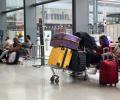
An airport operator will be responsible for maintaining overall service standards at an airport, including those delivered by third-party service providers, under new rules being framed by the Airports Economic Regulatory Authority (AERA), its chairman SKG Rahate told aviation stakeholders at a meeting on Wednesday

'The petrol lobby is very rich and strong.'

Electric vehicle (EV) manufacturers breathed a sigh of relief after the GST Council on Wednesday night retained the concessional 5 per cent rate on EVs, though they now face competition from small petrol and diesel cars, which will attract a lower 18 per cent levy.

Businesses are testing new markets, tapping into domestic demand, and pushing the government for relief.
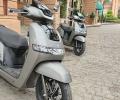
Hero MotoCorp and TVS Motor crossed Rs 1,000 crore in R&D spend for the first time, as legacy OEMs accelerate innovation to compete with new-age EV players.

The Kerala model is crucial as SMA patients in India had a long wait for a viable treatment option.

The textile and apparel sector is India's second-largest employment provider, after agriculture, and it is now caught in a wave of uncertainty following the Donald Trump administration's tariff policy.
